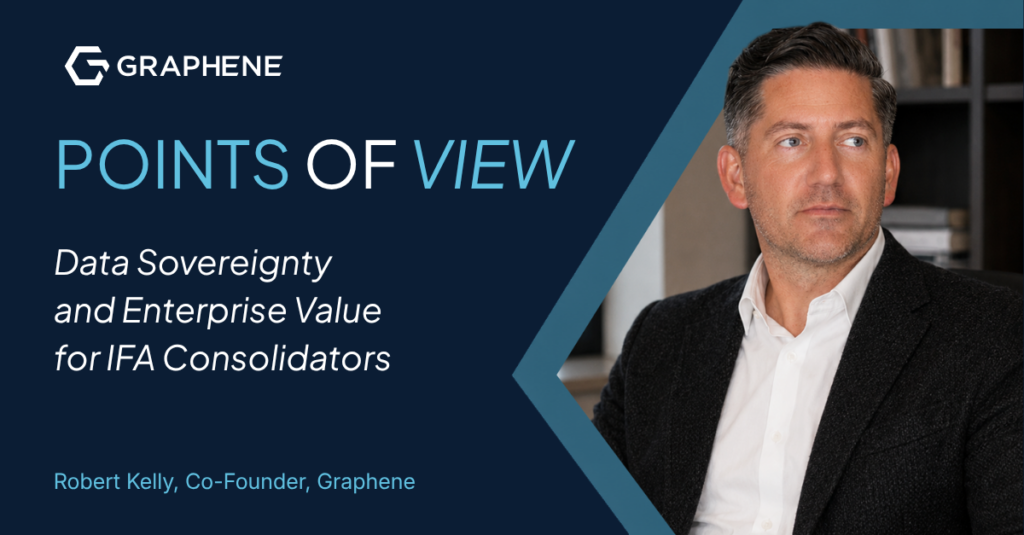
Robert Kelly, Co-Founder, Graphene
When private banks expand into new markets, the gap between ambition and outcome is almost always found in the same place. Not strategy. Not capital. Execution.
Most leadership teams at private banks know what they want to build. They understand their client base, their target markets and the kind of experience they want to deliver. What they consistently underestimate is the operational complexity of standing up a wealth management platform in a new jurisdiction, meeting institutional standards, and doing so on a timeline that makes commercial sense.
This is a pattern I have observed repeatedly. And it is the pattern that one global private bank decided to break.
The Gap Between Intent and Delivery
The firm serves high net worth individuals, family offices and professional advisers across multiple regions. As part of a deliberate international growth strategy, they identified a new market and set out to establish a fully functioning wealth management operation from day one. Not a provisional presence. Not a pilot. A live business, operating to the highest standards, capable of serving clients with the confidence and consistency the bank’s reputation required.
What made this case instructive is not the ambition itself. Plenty of private banks carry similar ambitions into new markets. What made it instructive was the clarity with which the bank defined what it actually needed, and the discipline with which it acted on that definition.
They were not in the market for a technology project. They were not looking to assemble a vendor ecosystem or manage a build programme across multiple time zones and regulatory environments. They were looking for institutional capability that already existed, already worked at scale, and could be trusted on behalf of their clients from the moment they opened for business.
That is a more precise requirement than it might appear. And meeting it demands a different kind of thinking.
What Institutional Capability Actually Requires
It is worth pausing on what that standard genuinely demands, because it is easy to understate.
A wealth management platform fit for a private bank serving high net worth and ultra high net worth clients must handle onshore and offshore custody within a single coherent framework. It must accommodate clients across multiple jurisdictions without creating operational exceptions for each one. It must integrate with trading infrastructure, support sophisticated client reporting and wrap all of this within an experience that reflects the bank’s own brand and service standards.
None of these requirements is unreasonable in isolation. Together, and under time pressure, in an unfamiliar regulatory environment, they represent a formidable operational challenge. Firms that try to meet this challenge by building internally tend to discover, often too late, that the timeline is longer, the cost is higher and the risk of getting it wrong is greater than anyone projected at the outset.
The bank in this case recognised that early. It was one of the more important decisions they made.
The Approach
Graphene was engaged to provide the infrastructure foundation. What that meant in practice was access to a wealth management platform that was already live, already integrated with custody, data management, onboarding and reporting infrastructure, and already operating at institutional grade. Nothing in the core architecture was built for this engagement. It was configured, not constructed.
That distinction matters more than it might seem. Configuration takes weeks. Construction takes years. The operational risk profile of the two is not comparable, and neither is the pressure placed on the leadership team during delivery.
The platform was aligned to the bank’s governance requirements and private client standards. Their leadership team retained full control over the client experience and oversight structures. Our operations team worked alongside their bankers and client managers to ensure that the transition from planning to live service was smooth and that nothing fell between the gaps.
As I have reflected on this engagement since, what strikes me most is not the speed of delivery, though that was significant. It is the clarity that comes from separating the question of what you need to own from the question of what you need to operate. The bank needed to own the client relationships, the brand and the growth strategy. They did not need to own the infrastructure that made those things possible. Recognising that difference was what made the outcome achievable.
“Our role was to sit behind the scenes connecting fragmented systems simplifying workflows and building a platform that advisers could trust and leadership could rely on.”
Rob Kelly, Co-Founder, Graphene
What the Bank Gained
The wealth management platform launched within months of the engagement beginning. Cross border servicing operated without disruption, supported by global custody connectivity. Digital onboarding and real time reporting were available to clients from the outset, not as features to be added in a later phase.
The more significant outcome, however, was structural. The platform the bank now operates in this market is not a single market solution. It is a template. The operational logic, the governance framework and the infrastructure layer can be replicated in new markets without rebuilding the foundation each time. What began as a project requirement has become a long term strategic asset, one that compounds in value as the bank continues to grow.
For the leadership team, the practical effect was equally important. They were not drawn into technology governance, vendor management or infrastructure decisions. They were free to do what private bankers do: build relationships, develop markets and serve clients.
What This Tells Us About Infrastructure
There is a broader point here that deserves attention, particularly for leadership teams at private banks with expansion on the agenda.
Infrastructure decisions are routinely treated as technical decisions, delegated to operations teams and addressed relatively late in the planning process. In my experience, this sequencing is a mistake. Infrastructure decisions are strategic decisions. They determine your timeline to market, your operational risk, your cost structure and, ultimately, your ability to deliver on the client experience you have promised.
The banks that move fastest and with the greatest confidence are not those that build the most. They are those that are clearest about what they need to build and what they can adopt. Institutional grade infrastructure, already proven at scale, already integrated and already operating, is not a shortcut. It is a serious strategic choice. And it is one that more private banks, in more markets, should be willing to make.
There is also a governance argument worth making here. Boards and senior leadership teams bear responsibility for the outcomes of market entry decisions, not just the quality of the strategy that precedes them. A plan that is sound in principle but fails in execution is still a failure. Treating infrastructure as a strategic question from the start, rather than an operational afterthought, is one of the clearest ways leadership teams can reduce that risk.
The firm in this case made that choice deliberately and early. The results demonstrate what becomes possible when they do.
Request the Case Study
If you lead or advise a private bank considering expansion into new markets and want to understand how institutional grade wealth management capability can be deployed without execution risk, the full case study is available via the button below.